
《JavaScript设计模式》笔记之面对对象
书籍是人类进步的阶梯,这本是电梯。
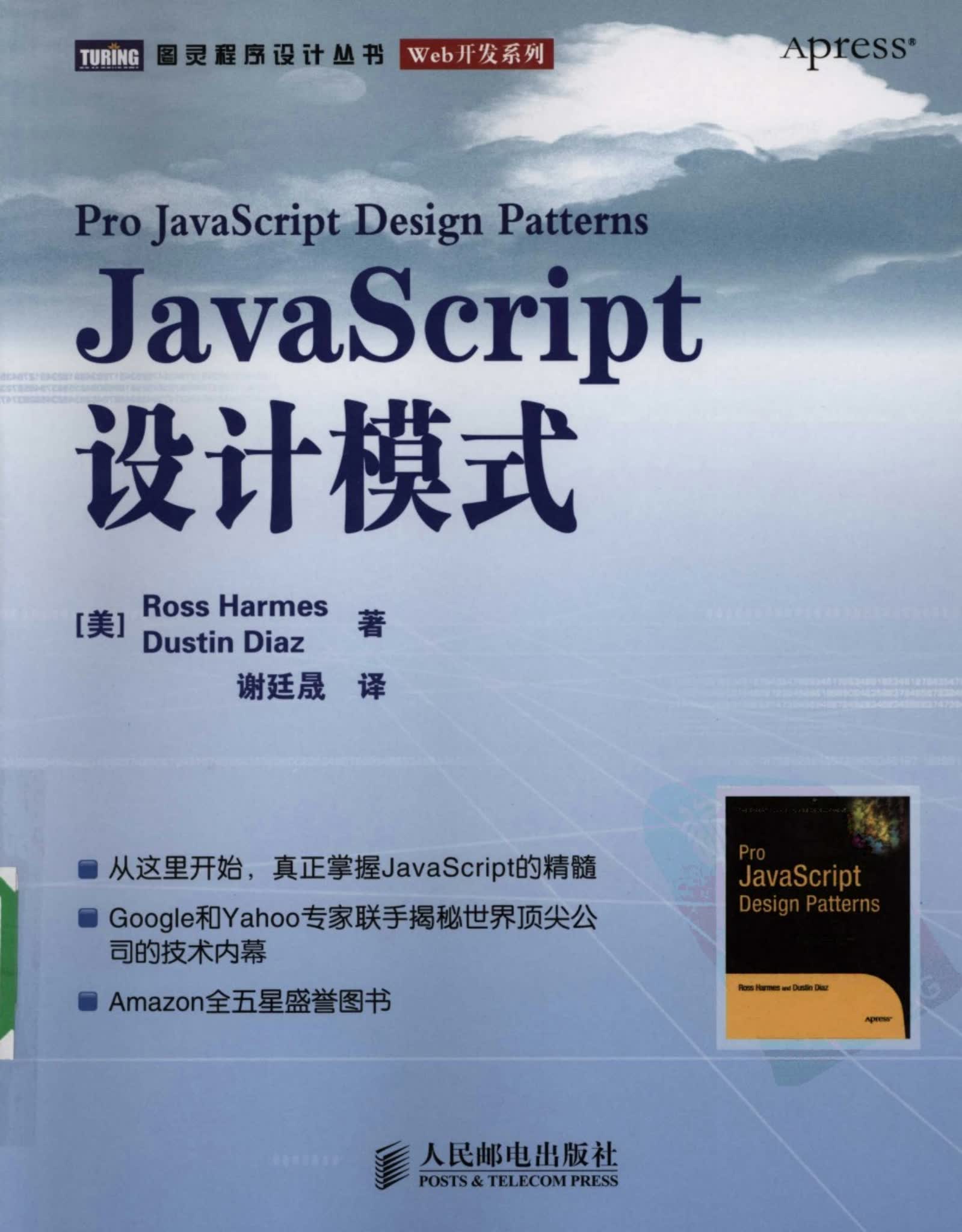
此片只包含了书籍前半部分,不推荐阅读
请看新篇
# 灵活的语言——JavaScript
JavaScript中,一切皆对象,这不仅仅是一个概念,还表示了一种思路。过去的我并没有真切的运用到代码中,直到这里,我才明白:为什么要使用这个;如何去使用这个。
- 在企业应用中,由于js库的特性,我们尽量不要重复使用全局变量,因为很有可能大家对变量的声明含义会使变量重复。
- 全局变量并不仅仅是在函数外部声明的
var a = 0;,还包含了var move = function(){}这样声明的函数。 - 尽量少使用全局变量,因为全局变量在使用完之后不会自动销毁,不但占据多余的内存,还有可能干扰后续代码的使用。
第一类型:
//第一种,最普通的函数结构,也是干扰力度最大的一种,bad choice
function name(){
 //name函数
}
function age(){
 //age函数
}

//第二种,上一种的变形,先声明,但还是声明了多余变量,还不是好选择
var name = function(){
 //name函数
}
var age = function(){
 //age函数
}
2
3
4
5
6
7
8
9
10
11
12
13
14
15
第二类型:
//第三种,把函数声明在对象里,作为对象的方法
var box = {
 name : function(){
  //name函数
 }
 age : function(){
  //age函数
 }
}

//第四种,上一种的变形,足够满足需求,但是这样的对象并不能重复使用
var box = function(){
 box.name = function(){
  //name函数
 }
 box.age = function(){
  //age函数
 }
}
2
3
4
5
6
7
8
9
10
11
12
13
14
15
16
17
18
19
第三类型:
//第五种,通过新声明对象的返回来确定函数的使用,不错的选择
var box = function(){
 return {
  box.name : function(){
   //name函数
  }
  box.age : function(){
   //age函数
  }
 }
}

//第六种,这个是我的接受度最高的,但是使用时一定要new
var box = function(){
 this.name = function(){
  //name函数
 }
 this.age = function(){
  //age函数
 }
}
var a = new box();
a.name();
2
3
4
5
6
7
8
9
10
11
12
13
14
15
16
17
18
19
20
21
22
23
第四类型:
//第七种,这个是我之前学习“爱心鱼游戏”所使用的方法,是非常完善的一种
var box = function(){};
box.prototype.name = function(){
 //name函数
}
box.prototype.age = function(){
 //age函数
}

//第八种,上一种的变形。但不能与上一种混用,否则会覆盖
var box = function(){}
box.prototype = {
 box.name : function(){
     //name函数
    }
    box.age : function(){
       //age函数
    }
}
var a = new box();
a.name();
2
3
4
5
6
7
8
9
10
11
12
13
14
15
16
17
18
19
20
21
第五类型:
//第九种,高级的、链式的、简洁的调用方式
var box = function(){}
box.prototype = {
 box.name : function(){
     return this;
        //name函数
    }
    box.age : function(){
       return this;
       //age函数
    }
}
var a = new box();
a.name().age();
2
3
4
5
6
7
8
9
10
11
12
13
14
终于明白了JavaScript的灵活到底是个什么意思,这让我更加爱上了这门语言。
# 写到的都是看到的——面对对象编程
# 面向过程与面向对象
JavaScript是面向对象的语言,不像其他面向对象语言那么拘束,JavaScript有着得天独到的优势——自由。
面向过程的语言,是C。(我的编程思想就是从C学来的。)
# 封装
意义就是把需要的东西作为个体表示出来,不是平摊开来的。
要把所有与之有关联的都放在一起,就是把变量、函数等放在相关的对象内,这样变量就不会相互污染。
//这种,是可以被其他的调用的
book.prototype = {
 a : true,
    b : function(){}
}
//这种,是不可以的,undefined
book.aaa = 1;
2
3
4
5
6
7
# 继承
# 类式继承
JavaScript中没有现成的机制,但是可以通过【第一个类的实例赋值给第二个类的原型】来实现具体继承机制。
继承后,子类可以使用父类的方法,如果方法名重复,则优先用子类的方法。
//父
function SuperClass() {
 this.superValue = true;
}
SuperClass.prototype.getsuperValue = function() {
 return this.superValue;
};

//子
function SubClass() {
 this.subValue = false;
}
SubClass.prototype.getsubValue = function() {
 // body...
 return this.subValue;
};

//继承
SubClass.prototype = new SuperClass();

//使用
var instance = new SubClass();
console.log(instance.getsuperValue); //true
console.log(instance.getsubValue); //false
2
3
4
5
6
7
8
9
10
11
12
13
14
15
16
17
18
19
20
21
22
23
24
问题:如果push值进去会影响父类,导致其他实例化对象也会出现这个值。解决办法:用构造函数继承。
# 构造函数继承
这种方法,避免了父类被污染的深坑。
但是,有产生了一种新的问题:这样每个实例都是单独拥有方法而不能共用,违背了代码复用原则。
var id;
//声明父类
function SuperClass(id) {
 this.books = ['JavaScript','css','html'];
 this.id = id;
}
SuperClass.prototype.showBooks = function() {
 return this.books;
};

//声明子类
function SubClass() {
 //继承
 SuperClass.call(this,id);  //这个函数就像替身术一样,替代了push对父类的污染
}

var instance1 = new SubClass(1);
var instance2 = new SubClass(2);

instance1.books.push("设计模式")
console.log(instance1.books); //["JavaScript", "css", "html", "设计模式"]
console.log(instance2.books); //["JavaScript", "css", "html"]
2
3
4
5
6
7
8
9
10
11
12
13
14
15
16
17
18
19
20
21
22
# 组合继承
这种方式结合了前两种的优点。
既保证了父类不被影响,又重复利用了方法。
var name,time;
//声明父类
function SuperClass(name) {
 //值类型共有属性
 this.name = name;
 //引用类型红有属性
 this.books = ['JavaScript','css','html'];
}
SuperClass.prototype.getName = function() {
 console.log(this.name);
};

//声明子类
function SubClass(name,time) {
 //构造函数式继承父类name属性
 SuperClass.call(this,name);
 //子类中新郑共有属性
 this.time = time;
}
//类式继承
SubClass.prototype = new SuperClass();
//子类原型方法
SubClass.prototype.getTime = function(first_argument) {
 console.log(this.time);
};

var instance1 = new SubClass("aaa book",2016);
var instance2 = new SubClass("bbb book",2017);
instance1.books.push("设计模式")

console.log(instance1.books);  //["JavaScript", "css", "html", "设计模式"]
instance1.getTime(); //2016
instance1.getName(); //aaa book
console.log(instance2.books);  //VM1217:34 ["JavaScript", "css", "html"]
instance2.getTime(); //2017
instance2.getName(); //bbb book
2
3
4
5
6
7
8
9
10
11
12
13
14
15
16
17
18
19
20
21
22
23
24
25
26
27
28
29
30
31
32
33
34
35
36
# More
除了这些个继承方法,还有更多的。
- 原型式继承:根据已有的对象创建一个新的对象,同时不必创建新的自定义对象类型。(在对象内创建)。
- 寄生式继承:原型式继承的拓展。先声明基对象,然后通过原型继承方式创建新对象,然后拓展新对象,最后返回新对象。
- 寄生组合式继承:先创建父类,以及原型方法,然后创建子类,并在构造函数中实现构造函数式继承,然后用寄生式继承父类,随后再添加一些子类的方法。(这个我看不太明白)
# 多继承
原理:通过循环复制出多个父类的属性。(extend方法的延伸)
单继承:
var extend = function (target,source) {
 //遍历源对象的属性
 for (var property in source) {
  //复制
  target[property] = source[property];
 }
 //返回目标对象
 return target;
}
2
3
4
5
6
7
8
9
多继承:
var mix = function () {
 var i = 1,     //从第二个参数开始为被继承对象
  len = arguments.length, //获取参数长度
  target = arguments[0], //第一个对象为目标对象
  arg;     //缓存参数对象
 //遍历
 for (; i < len; i++) {
  //缓存源对象
  arg = arguments[i];
  for (var property in arg) {
   //复制
   target[property] = source[property];
  }
 }
 //返回目标对象
 return target;
}
2
3
4
5
6
7
8
9
10
11
12
13
14
15
16
17
# 多态
多态:同一方法在参数不同的情况下做出不同的效果。
相比之下,多态属于一条比较简单的特性,用简单的逻辑即可实现。
简单的逻辑:就是通过判断的参数的对应位置是否有值,来对该值设置默认值。
//有参数时返回参数值,无参数时返回1。
function name(a) {
 var oa = a?a:1;
 return a;
}
2
3
4
5
复杂的逻辑:通过function的默认参数arguments来确定各个参数的值,随之做出不同反应。
function arr() {
 function a(){
  //无参时
 }
 function b(){
  //1参时
 }
 function c(){
  //2参时
 }
 this.arr = function(){
  switch(arguments.length){
   case 0: return a();
   case 1: return b();
   case 2: return c();
  }
 }
}
2
3
4
5
6
7
8
9
10
11
12
13
14
15
16
17
18
# End.总结
下载地址 《JavaScript设计模式》 (opens new window) 提取码: nn42